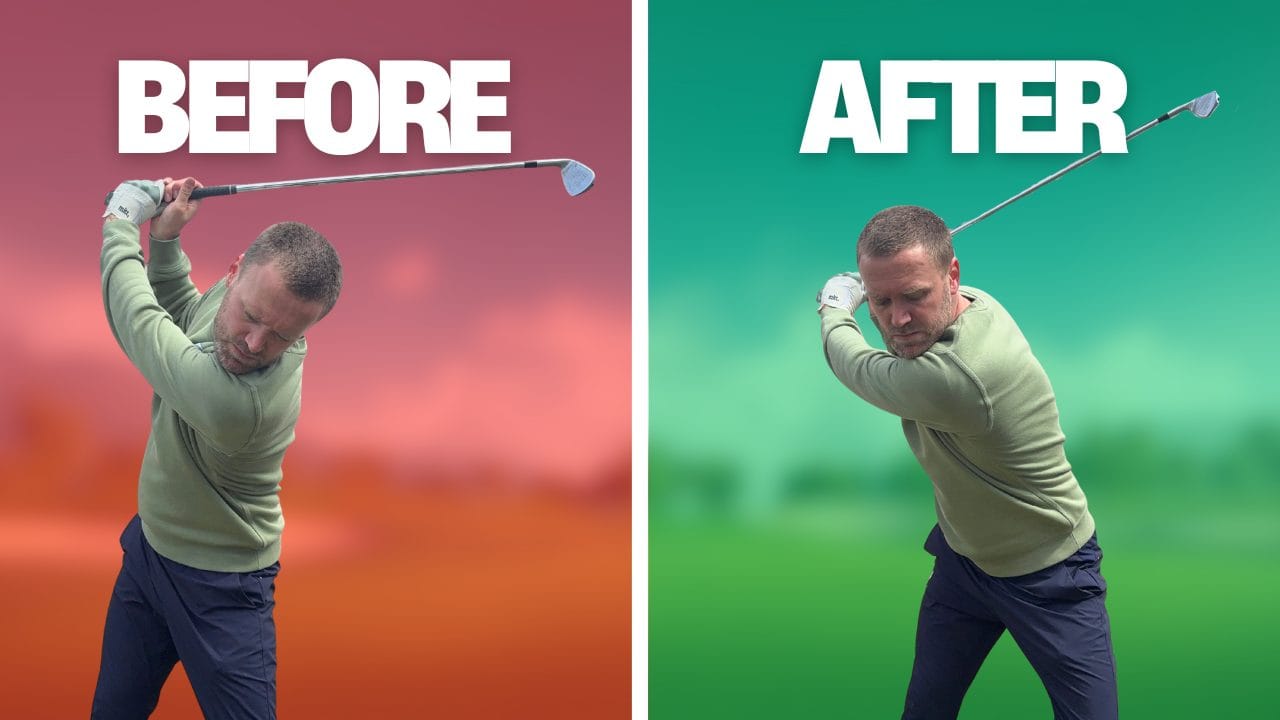
A few months ago, I decided to reach out to a golf coach (Giles Golf) for lessons via the Skillest Golf App. We worked on several setup changes, including fixing my reverse pivot, building a ball-position system, and establishing better shaft lean. These fundamental changes have had a hugely positive impact on my ball striking and overall confidence on the golf course, and I am excited to share what I have learned and the positive direction my swing has taken. For the next part of my journey, I have switched to a new coach, Jeff Wright, though both Jeff and Giles are highly recommended.
If you are interested in online coaching through Skillest, my Skillest discount code ‘AgWM8Mii’ will save you 25% on lessons with Jeff.
Watch Episode 3 Now
If you’d prefer to watch what I’ve been working on to fix my reverse pivot rather than read, you can check out episode 3 of my Journey to Scratch series below.
View video transcript
Fixing My Reverse Pivot
In this video, I’m going to tell you a little bit about what I have been working on to try and correct my reverse pivot. Now, this has been a huge issue for me for a number of years playing golf, but recently I went through some online lessons with a golf coach through the Skillest platform. I’ll put the details of that coach in the description below. But we worked on the sort of fundamentals of my swing, in particular, the setup. And in this series of videos, I’m going to talk through what I have been working on to get to my current stage. This video is going to focus a little bit on the reverse pivot. Now, for me, if I just grab a golf ball, the issue that I have always had was in my back swing, I basically had a reverse spine, if you like. So, my sternum was very much pointing this way. And I would get to this stage here in the golf swing. Now, I’ll put on screen a little overlay of my skeleton, and it’ll allow you to see which way my spine is actually pointing, although it’s probably pretty clear to see. Now, from here, the movement for me when I bumped the hips was always to come over the top. And I would try and save those shots by opening the club face to at least be able to hit a relatively straight shot or a bit of a slice or a fade if you like. But the other thing aside from inconsistent ball striking that this setup position in my back swing led to was also some really bad pain in the bottom of my back. So just around about here on the left-hand side. So what I basically found is every time I played golf when I got to the top of back swing and then swung through could always feel pain in my lower back. With what I have implemented that pain has gone. So I don’t have any of that stress anytime I play golf, which is incredible. So what did I do to improve things? Well, again, if I just address the ball here, the position I now find myself in is much more like this. So again, I’ll put the skeleton up, and you will see that my sternum is pointing more away from the target from here. And then from this position, I can just bump and swing down. Now, I spent a huge amount of time training myself on YouTube and reading articles to correct this. And it wasn’t until I got the online lessons with the coach that it became so quick and easy to fix. So, I’m going to explain in this video what I did or what I was advised to do to correct this.
The Fix for My Reverse Pivot
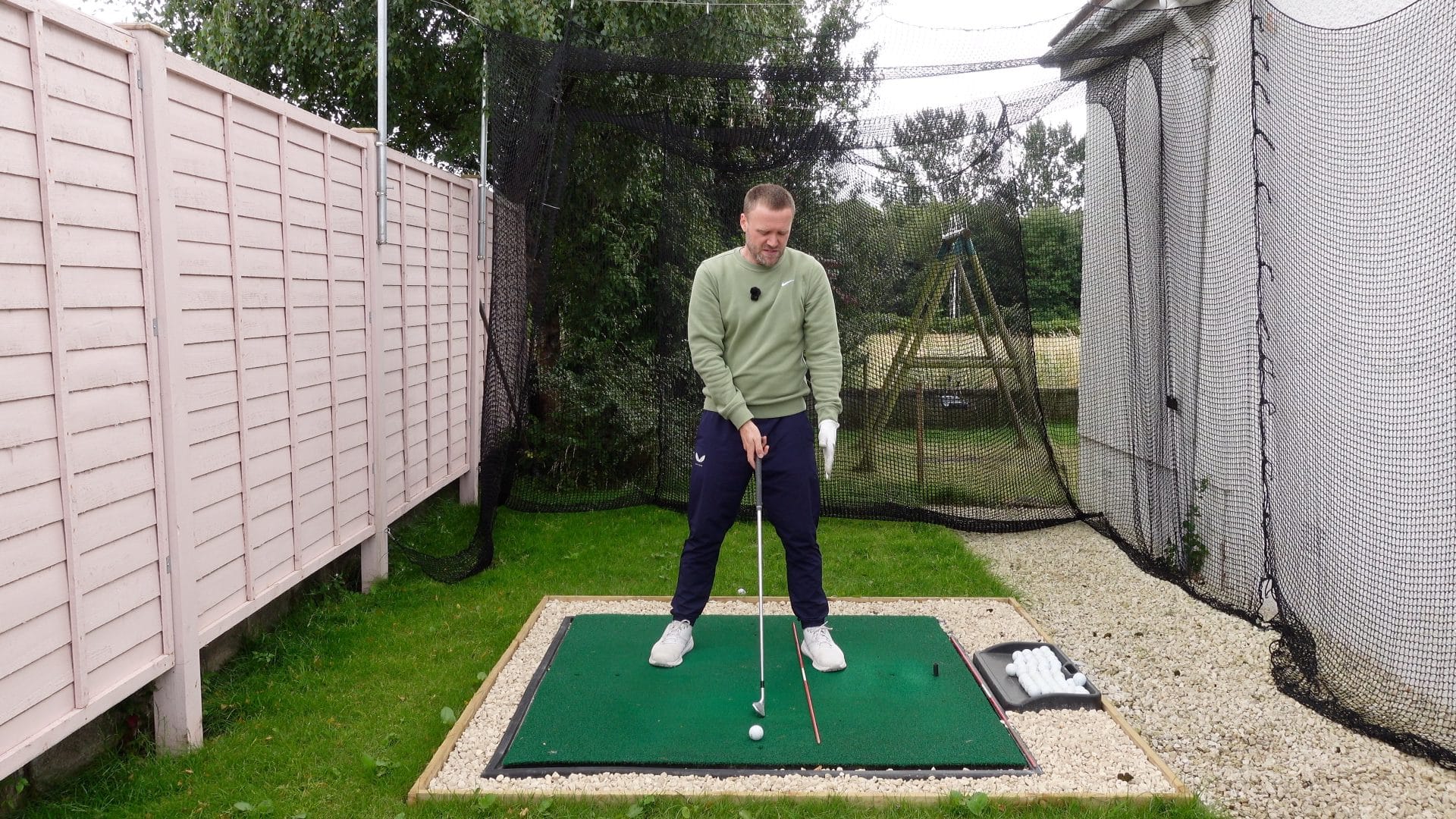
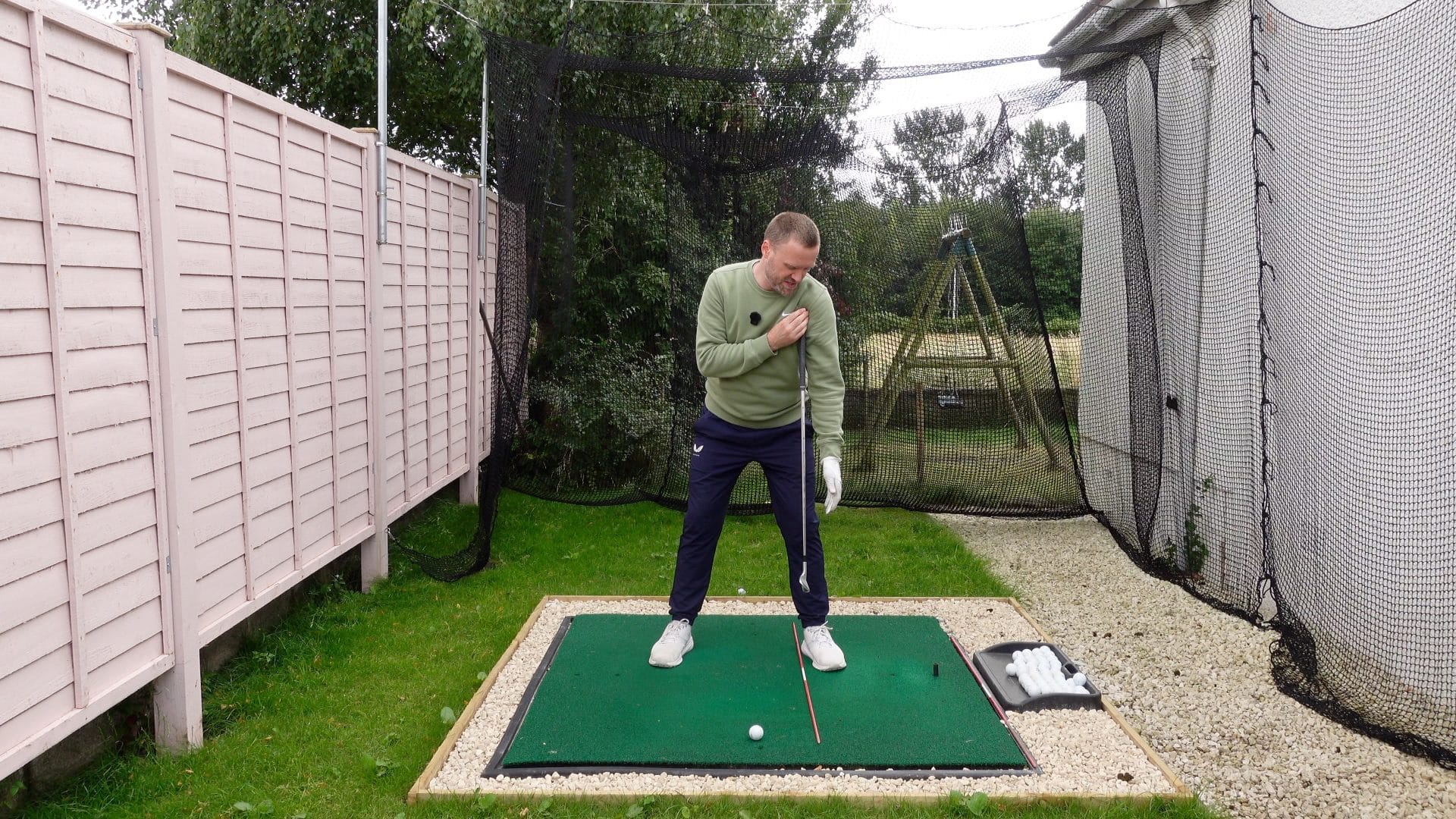
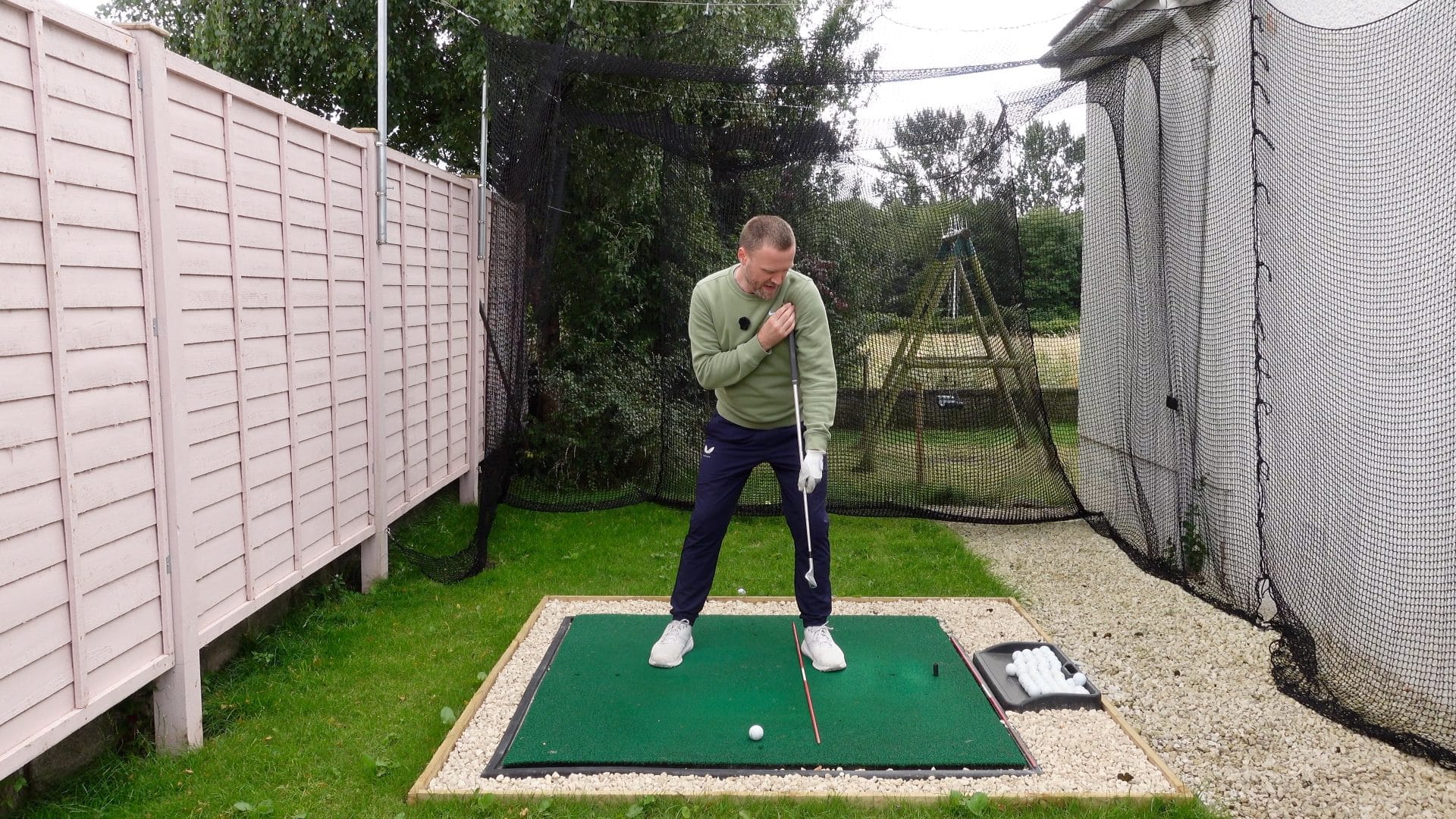
First part was just to grab an alignment stick like this and basically just pop it onto the inside of the lead foot just like this. From here, the idea was to have the inside here, so the joint of the lead shoulder over the alignment aid. So, I basically take my position and then taking a club, just drop it down like this. Okay. So, a little bit more weight on the left-hand side or the lead side, but this joint, not the outside of the shoulder, but the joint over the alignment aid. Now, from here, if I was just to take my back swing, I’m still in this kind of position here. So, the really, really important point here is to get this joint over the stick, but then just a gentle bump left of the hips. And that is enough to get to this position here. Now it seems so simple and it is but for me it took a long long time to find somebody who just highlighted quite quickly that was one of the issues and that’s the solution. So now if I address the ball let’s just move the ball in here for this example. So what I tend to do when I’m setting up is I just touch the joint so I know it’s over my heel and then I just gently bump the hips. And then from here you’ll see if I make a back swing, the back is facing towards the target. The sternum is correctly moving away or positioned away from target. And then from here I can just swing down. And what I’ve noticed as well is my shot shape has now basically moved into a draw as opposed to this big fade or slice.
Down the Line Shot with Reverse Pivot
So what I’ll do is I’ll just show you a couple down the line. We’ll hit a few balls. First one will be basically the old move. So if I just get into position here with a nine iron again, I’m going to put lots of weight on the lead side and we’re going to get that reverse pivot movement. It feels strange to get into it now, but I was very much like this. So you see terrible strike there. Very uncomfortable. And I can feel the pain in my back.
Down the Line Shot Without Reverse Pivot
Whereas now, we’ll do this without an alignment aid. I just get into position. I’m going to just touch that joint in there over the heel, bump the hips ever so slightly. And then from here, it’s just about making a rotation, we can strike the ball. So much much better strike, and you’ll see more from the inside.
Video Close
Now, of course, there are a lot of other things in my swing, my setup that I have been working on and have addressed, but as I said, in this series, I’m just going to take you through those things. Hopefully, that video was useful, particularly if you have any issues with that reverse pivot. For me, that has made a massive, massive difference. In the next video, we are going to look at ball position. So, historically, I’ve always tended to have the ball a little bit too far back in my stance. So, I’ll talk you through the system that I use and I’ve practiced with to try and make sure that I’m consistent with the position of the ball from a driver right the way through to my 60° wedge. But if you enjoyed this video, be sure to hit that subscribe button and check out the links in the description below. They’ll have links to the next videos within this series and also the more detailed blog posts for the journey. If you want to check those out, they’re available over on andesgolfblog.co.uk or in the links below. But hopefully you found this video to be interesting and I’ll see you in the next one.
Reverse pivot: The Problem
For as long as I can remember, I’ve always had a bad reverse pivot at the top of my backswing. Essentially, this meant I was putting too much weight on my front foot during the backswing and then shifting it incorrectly to the back foot during the downswing. The position I found myself in at the top of my backswing not only meant I came over the top during my downswing, but also led to long-term lower back pain during nearly every single round of golf I played.
This movement was so ingrained in my golf swing that no matter how much I tried to fix it, nothing worked. That was until Giles Golf (via Skillest) offered me a solution.
Reverse Pivot: The Fix
Despite trying for years to fix my reverse pivot myself, nothing seemed to work. I sat through hours of YouTube videos, read articles and books, and tried to copy the pros’ positions, but nothing worked. However, all it took was one video and two small movements to completely change my backswing and ball striking.
Step 1: Shoulder joint
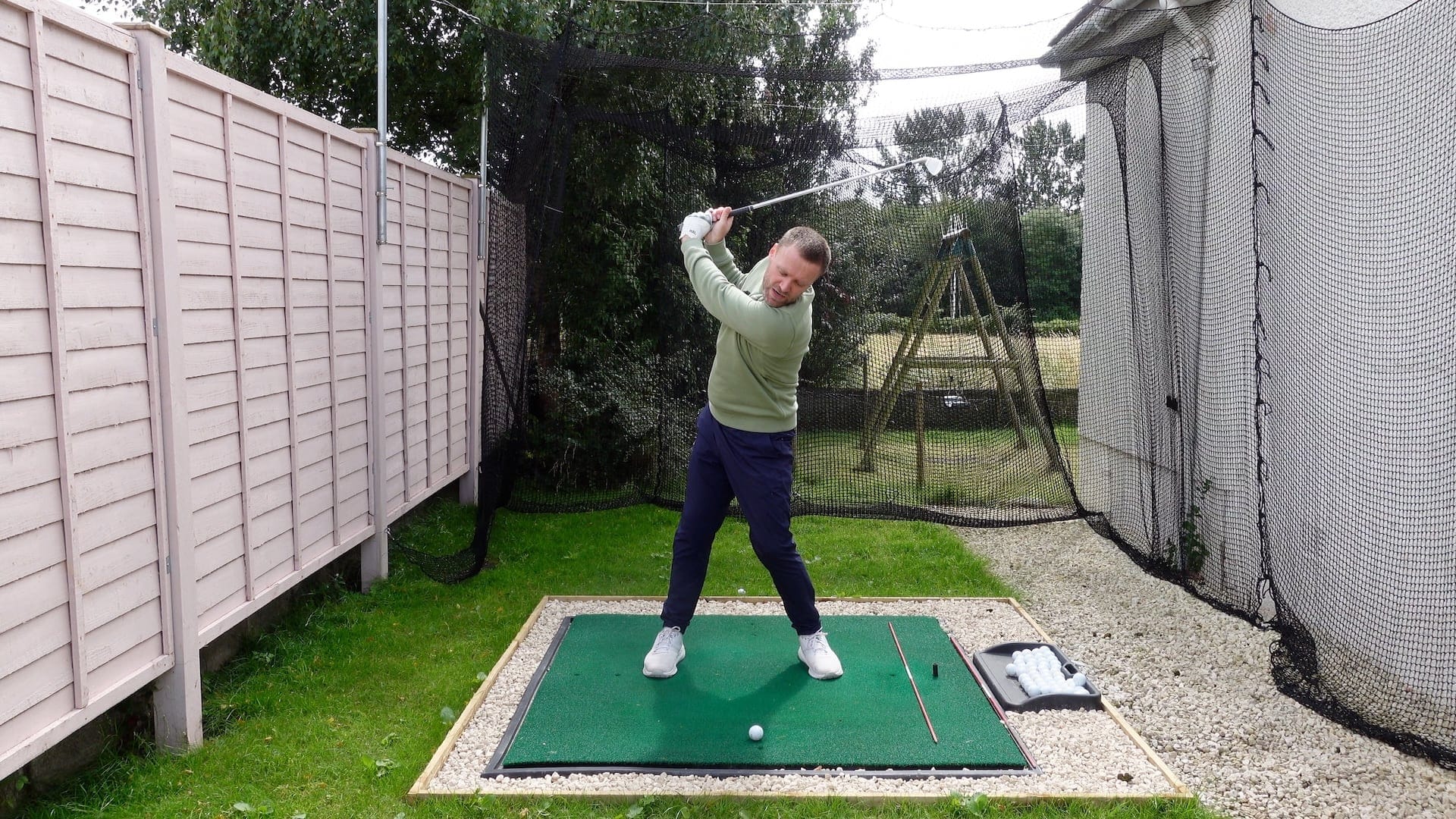
Step 1 involved adding a little more weight to my lead side and ensuring that my lead shoulder joint was positioned over my lead heel at address. To help ensure I was properly aligned, I placed an alignment stick on the ground, positioning it against the inside of my left foot so that it pointed forward from my heel (1).
Next, I took a golf club and dangled it vertically from my left shoulder joint down over the stick (2). Doing so helped me confirm that the shoulder joint was in the correct position.
Step 2: Hip bump
Now, at this point, if I were to take my backswing as normal, I’d still find myself in the reverse pivot position at the top, because although my weight had moved onto my lead side by positioning my shoulder joint over my left heel, my spine would still be either straight or leaning towards the target.
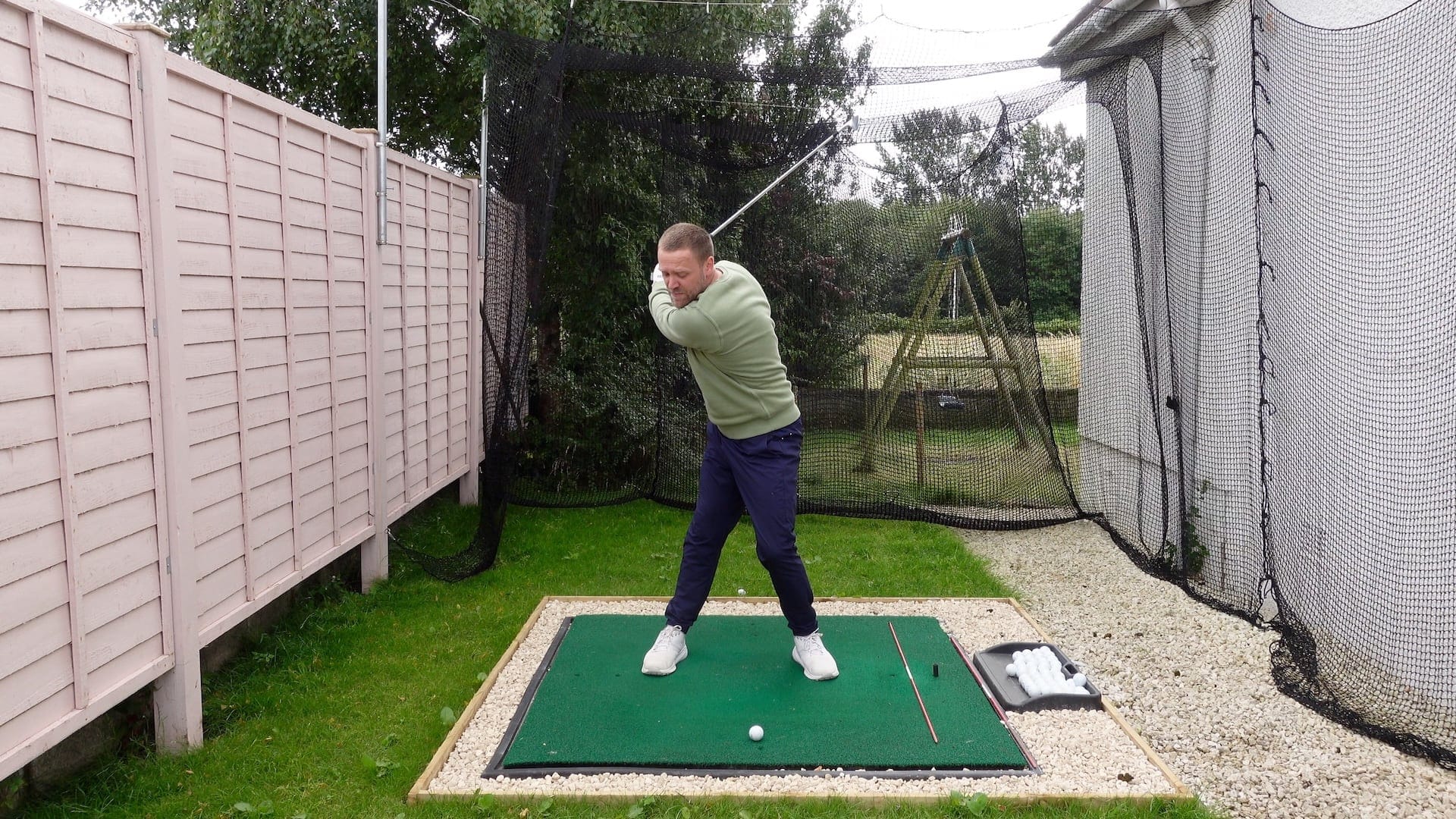
To help tilt the spine away from the target, all that was required was a gentle bump of the hips towards the target (3). Now, it’s important to mention that this wasn’t a huge lateral shift at address, just enough to get that spine tilted as shown below (4).
The big difference for me now is that on the downswing, instead of coming over the top and swinging out-to-in as I always have, the club path is now much more in-to-out, resulting in better ball striking and gentle draws (most of the time).
The Result: No more reverse pivot
When I look back, I cannot believe how straightforward this issue was to correct. As mentioned above, prior to this lesson, I had struggled with the reverse pivot for years and never managed to find a solution, no matter how many videos I watched or articles I read. With two simple adjustments at setup, my backswing and ball striking have improved dramatically. Not only that, but the lower back pain that I had been plagued by for a number of years stopped almost instantly, and I can now play golf pain-free.
Next steps on the swing improvement journey
Having fixed my reverse pivot, the next thing my coach and I worked on was ball position. Historically, I’ve been guilty of placing the ball a bit too far back in my stance and being inconsistent with positioning. In episode 4, I’ll reveal the ball-positioning system I’ve been using to help ensure my ball position remains consistent for every club in the bag.
Thanks again for stopping by, and feel free to share your thoughts on this update in the comments below.
Never miss an update
Enter your email below to be added to my mailing list, where you’ll receive my latest updates, reviews and exclusive discounts straight to your inbox.
You’ll never be spammed and can unsubscribe anytime you like.